Sitting at a desk, wondering if your body and brain could handle oilfield work, is a different kind of career anxiety. Halliburton careers attract that specific restlessness.
The company operates across more than 70 countries and employs tens of thousands. That scale alone makes the hiring pipeline worth studying if you come from trades, manufacturing, or the military.

But Halliburton field operations and technical roles carry a lifestyle cost that job postings never spell out. The pay can be strong. The schedule can rearrange your entire life.
I think the gap between “interested in Halliburton careers” and “ready to accept a rotational schedule across 70 countries” is where most applicants stall. And it should be.
What Halliburton Field Operations Jobs Look Like Day to Day
Field operations are the physical backbone of oil and gas production. These positions place workers at job sites in deserts, on offshore rigs, and across frozen terrain. The work is hands-on, often physically punishing, and almost never predictable.
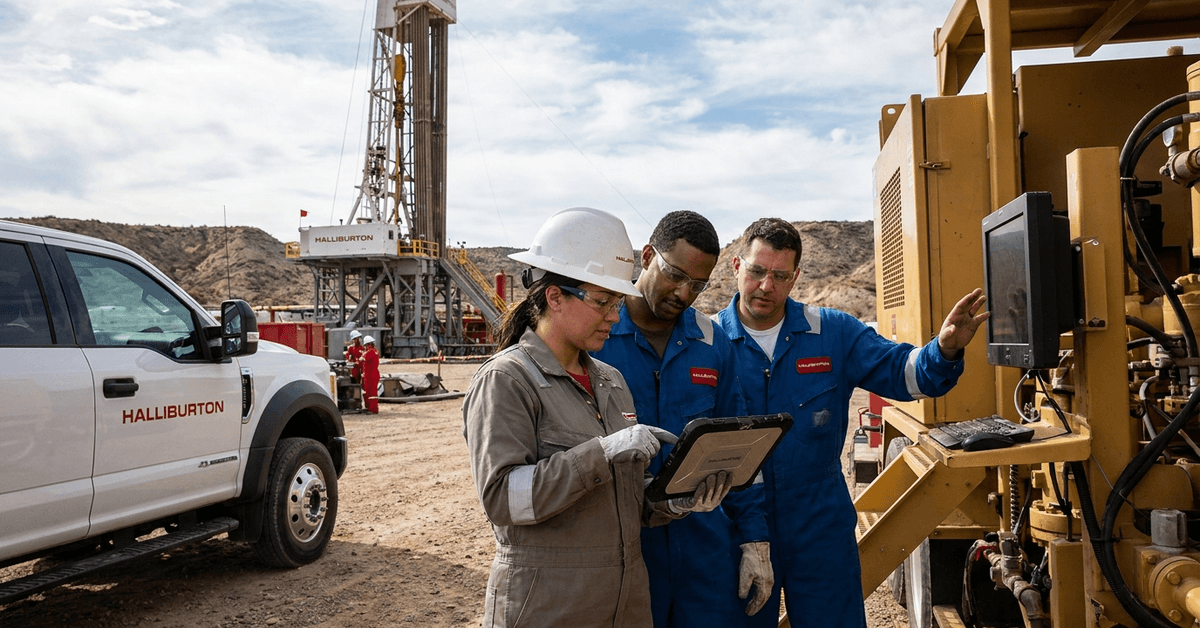
Rotational schedules define this world. Staff might work extended shifts lasting days or weeks straight, followed by longer stretches of time off. That rhythm sounds appealing on paper.
Weeks off! But here is something that never shows up in a career guide: rotational schedules don’t just change when you work. They change who you spend time with.
Friends on normal Monday-to-Friday schedules drift. Relationships strain under unpredictable absences. The people who do well on rotation aren’t the ones who “tolerate” it.
They are people whose social lives and hobbies already fit an irregular rhythm. Think freelancers, former military, or anyone who spent years doing shift work in hospitals or factories.
Types of Halliburton Field Roles
The field operations side of Halliburton breaks into a few distinct positions worth understanding:
- Field Operators handle equipment, monitor processes, and run on-site procedures during active drilling or service jobs
- Service Technicians troubleshoot and maintain machinery and tools at the site level
- Drilling Support staff manage logistics and equipment right at the drilling location
- Field Supervisors lead teams and carry responsibility for safety, efficiency, and crew coordination
Each of these roles carries a different level of physical demand and technical knowledge. Supervisors, for example, typically need years of field experience before they are trusted with crew oversight.
Who Thrives in Halliburton Field Work
The best-suited candidates share a few traits that go beyond a strong back and a hard hat. They tolerate ambiguity. They solve problems under time pressure. And they handle isolation without spiraling.
Anyone coming from construction, military service, or industrial manufacturing has a head start. The physical conditioning and equipment familiarity transfer directly.
But Halliburton also runs internal training programs designed to bring in people with less direct experience, which means someone with a high school diploma and solid mechanical aptitude can enter at the operator level and progress upward.
Halliburton Technical Careers: Engineering, Data, and Software
Technical roles at Halliburton run parallel to field operations but sit in a completely different daily reality.
Engineers, data analysts, and software developers support field teams from offices and labs. Some travel to sites periodically, but the default is desk-based work.
Engineering Positions at Halliburton
Petroleum engineers develop techniques for drilling and resource recovery.
Mechanical and electrical engineers design, repair, and upgrade the specialized equipment that field crews rely on. These positions typically require a relevant university degree, and competition for them is stiff.
I would argue that Halliburton’s petroleum engineering roles are among the few in the industry where a new graduate can get direct exposure to field-level problems within the first year.
Many competitors keep junior engineers in office roles for two or three years before field rotations.
Data and Software Roles
Data scientists and analysts use operational data to predict equipment failures, track performance, and recommend process changes. Software developers build internal tools for communication and precision work.
These roles are growing fast. Halliburton’s push toward digital tools means developers and data specialists often find lateral movement opportunities that didn’t exist five years ago.
A developer who joins to build a monitoring dashboard might end up working on carbon capture modeling within a couple of years.
| Role Category | Typical Education | Office vs. Field | Entry Path |
|---|---|---|---|
| Field Operator | High school diploma | 100% field | Direct hire, internal training |
| Service Technician | Trade certification or equivalent | 90% field | Direct hire or apprenticeship |
| Petroleum Engineer | Bachelor’s degree in engineering | Mixed (office + field rotations) | Graduate recruitment |
| Data Scientist | Bachelor’s or master’s in analytics/CS | 90% office | Direct hire |
| Software Developer | Bachelor’s in CS or related field | 95% office | Direct hire |
The takeaway: technical roles demand more formal education, but field roles offer a faster start for candidates willing to work physically demanding schedules.
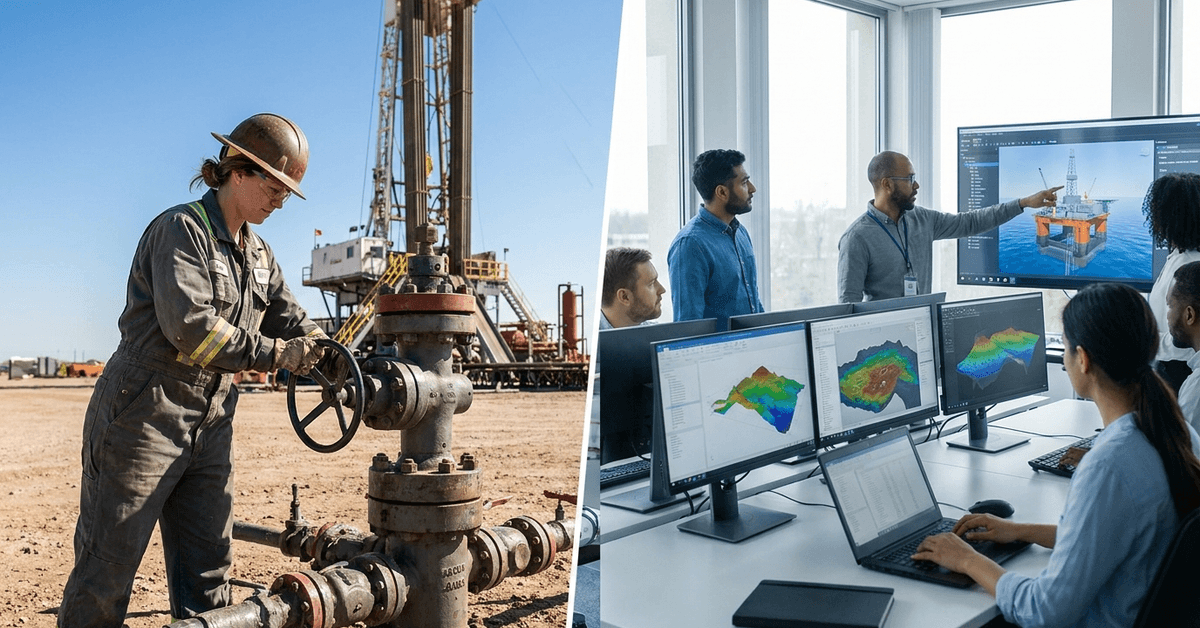
Halliburton Salary and Benefits: Are They Worth the Lifestyle Trade-Off?
Pay across Halliburton’s field and technical divisions often runs above national averages. Entry-level field operators start near market rates, while experienced engineers and supervisors can earn notably higher wages.
The real bump comes from overtime pay and hazard rates applied to remote or difficult postings.
Benefits typically include health insurance, pension and retirement options, performance bonuses for certain job categories, and paid leave. Some field roles also include travel allowances.
But salary alone is the wrong way to evaluate a Halliburton career. I would weigh the total compensation against the lifestyle cost of remote postings, rotational schedules, and the physical toll of fieldwork.
A $90,000 field operator salary sounds impressive until you factor in 14-day stretches on a rig platform in the North Sea during winter.
The International Mobility Question
Halliburton employees often get chances to relocate: short-term postings in high-demand regions, or longer international assignments. These can be financially rewarding. They can also be brutal for anyone with a family, a mortgage, or a dog.
I think the common advice to “always say yes to international postings for career growth” ignores a basic reality about Halliburton’s global operations across 70+ countries.
An assignment in a lucrative posting means nothing if it costs a marriage or burns out a worker within 18 months.
The smarter move is to treat international mobility as something you plan for, not something you accept reactively. Check which regions match your personal constraints before telling a recruiter you’re open to anything.
How to Apply for Halliburton Jobs in 2026
The application process is more straightforward than you might expect. Halliburton posts roles on their official careers page and on platforms like LinkedIn. Third-party job boards sometimes carry listings too, but the oil and gas sector has a well-documented problem with recruitment scams. Stick to verified sources.
Application Materials and Interview Tips
A resume, a cover letter, and sometimes upfront references are standard. Candidates who include practical examples of fieldwork, technical projects, or safety certifications stand out.
A safety certification or first aid credential can carry surprising weight, especially for field roles where medical and safety screenings are mandatory.
Interviews tend to be practical. Field candidates face mechanical aptitude tests. Technical candidates get situational problem-solving questions. Recent graduates might go through assessment centers with group activities.
One common mistake: applicants send generic resumes that could apply to any industrial employer. Halliburton hiring managers see hundreds of these. Specificity matters. Reference the exact role title, the location, and any relevant equipment experience.
The Career Hedge Nobody Talks About: Transferable Oilfield Skills
Energy technology is shifting. Geothermal energy, carbon capture, and hydrogen production are growing sectors that rely on many of the same drilling, engineering, and logistics skills used in traditional oilfield work.
Halliburton has been putting resources into lower-emission technologies, and workers who build skills in the oil and gas side now may find those skills portable to newer energy sectors within a few years.
A field operator who understands directional drilling has a head start in geothermal well construction. A petroleum engineer who works on subsurface modeling can pivot to carbon storage site analysis.
I think this transferability angle is the single most underrated reason to consider a Halliburton career in 2026.
The U.S. Bureau of Labor Statistics projects continued demand for petroleum engineers, but the real growth story is in adjacent clean energy roles that need the same core competencies.
Questions People Ask About Halliburton Careers
Q: Do Halliburton field jobs require a college degree? Many entry-level field roles only require a high school diploma and physical fitness. Halliburton runs internal training programs that can move operators into more specialized positions over time. A university degree becomes necessary mainly at the engineering or management level.
Q: How long are Halliburton rotational shifts? Rotational schedules vary by role and location, but shifts can last days or even weeks, followed by equal or longer time off. Offshore positions tend to have the longest continuous work periods. Ask about the specific rotation during the interview process.
Q: Is Halliburton hiring internationally in 2026? Halliburton operates in over 70 countries, and international postings are a regular part of the career path. Availability depends on regional demand and the specific discipline. Checking the careers page filtered by country gives the clearest picture of current openings.
Q: Can construction workers transition into Halliburton field roles? Construction experience transfers well to field operations at Halliburton. Equipment handling, physical endurance, and site safety awareness are directly applicable. The transition is smoother than moving from a desk-based background, and internal training fills the remaining gaps.
Q: Does Halliburton pay for employee training and certifications? Halliburton offers internal training programs, courses, and mentorship access. Specific certification sponsorship depends on the role and business unit. Asking about training support during the application or interview stage is the best way to confirm what’s covered.
Conclusion
Halliburton careers reward workers who match their ambitions to the lifestyle these roles demand. The rotational schedule, remote postings, and physical work filter out candidates who chase salary alone.
Smart applicants treat oilfield skills as a long-term asset, especially as clean energy sectors grow. That career hedge may turn out to be the best reason to apply in 2026.